




When most people think of a barrel of oil, they think about filling up their car. But a barrel of oil is used for far more than just refining into gasoline.
Take a look around you. Your phone, laptop, running shoes, food packaging and even the insulation in your walls all have something in common: many began, in part, with oil.
When crude oil is refined, some of it’s turned into fuel for transportation like gasoline and diesel. Another portion, though, is refined into petrochemical feedstocks, which are then converted into petrochemicals. Manufacturers use these various petrochemicals as the building blocks for plastics, synthetic fibres and rubber, solvents and resins that are used in thousands of everyday products, from medical equipment and electronics to clothing, packaging and household goods.
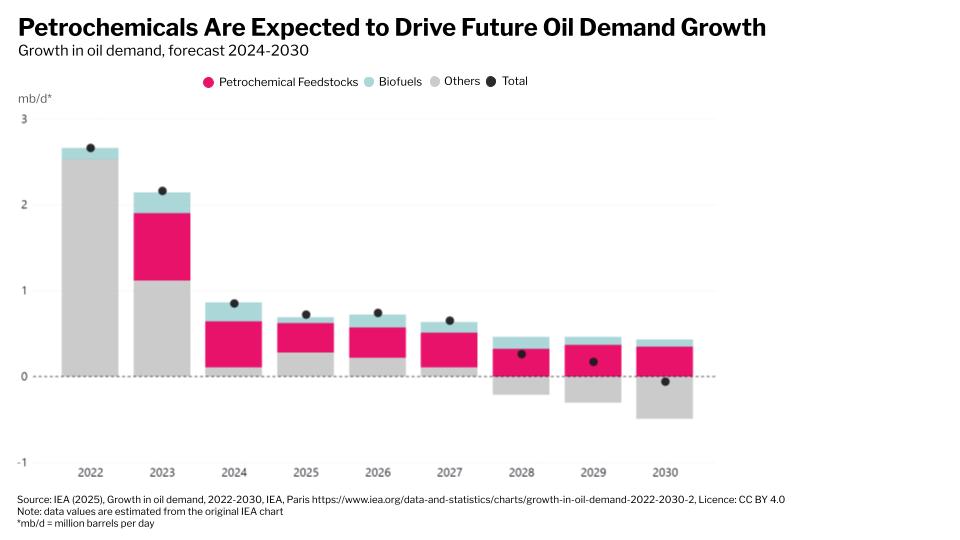
According to the International Energy Agency (IEA), petrochemicals accounted for about 16% of global oil demand as of 2025. As incomes rise and cities grow, people buy more stuff and the demand for these other materials made from oil also grows. The IEA estimates petrochemicals have been the largest source of growth in global oil demand since 2024 and will continue to be through 2030. In other words, even if oil demand for transportation fuels were to level off or decline in future — something many experts believe to be inevitable but global consumers keep resisting — demand for oil as an input in manufacturing is set to keep growing.
Much of that growth will come from Asia, where factories manufacture everything from iPhones to Lululemon clothes to IKEA furniture. All rely on petrochemical-based materials in their production. Since 2015, oil demand among major Asian economies, including China, India, Japan and South Korea has increased by more than 25%, as industrial growth drives demand for fuel and petrochemical feedstock. Though a portion of that is ultimately used for fuel, China, in particular, has been investing in new and retrofitted refineries to increasingly shift production to petrochemical feedstocks.
As one of the world’s largest producers, Canada is likely to help meet that demand. Already, the share of Canada’s crude oil exports shipped to Asia has increased from less than 0.5% just a few years ago to 6.6% in 2025. As access to Asian markets increases, through both further optimization of the Trans Mountain Expansion pipeline and another potential pipeline to the west coast, more Canadian crude will reach the world’s largest manufacturing region.
All this to say the future of oil demand doesn’t just depend on the adoption of electric vehicles or how much people travel but also on the demand for the products we use every day.
Have an idea for our next EconMinute? Email us at media@businesscouncilab.com.