




Over the next several months, the Business Council of Alberta is undertaking a major Task Force-led project aimed at addressing Alberta’s labour supply needs in the skilled trades, ensuring we have the workers and skills to build a prosperous future. And yet, despite the vital role skilled tradespeople have played in building and maintaining this province, many of us have a limited understanding of what it takes to become a journeyperson in the trades.
As Alberta continues to experience a population boom, and with the promise of new major projects in emerging sectors, skilled tradespeople are going to be even more important.
In this paper, we aim to fill existing knowledge gaps by charting out how individuals in the skilled trades become qualified to practice as journeypersons in Alberta. In so doing, we begin building the foundation of what will lead to pragmatic policy recommendations for a more prosperous and skilled province.
Setting the Stage
To start, it’s important to point out that there are many kinds of trades and a range of education and training requirements that need to be completed before an individual is considered qualified to practice their craft.
In Alberta, the Skilled Trades and Apprenticeship Education Act regulates almost 60 designated trades (not including the branches that sometimes exist within a trade, like auto body refinishers or auto body repairers, both within the auto body technician trade, for example). A trade is designated when provincial legislation sets out the conditions under which an individual is qualified to perform certain aspects of the job. These aspects are called restricted activities. The legislation and these restrictions are to ensure quality, safety, and reliability.
There are two categories of designated trades, distinguished by whether an individual needs formal certification before they can perform restricted activities:
-
- 1. Compulsory Certification Trades, representing just over 30% of the designated trades, require an individual to be certified as a journeyperson or a supervised journeyperson-in-training (i.e., a registered apprentice) to practice all aspects of the trade. Examples include electricians, ironworkers, heavy equipment technicians, plumbers, and welders.
-
- 2. Certification Optional Trades, representing almost 70% of the designated trades, usually have a certification training pathway like an apprenticeship available, but completing it is not a requirement to practice. An employer can deem an uncertified individual as qualified to perform restricted activities if they consider an individual’s work experience as sufficient to do the job. Examples of Certification Optional trades include bricklayers, carpenters, millwrights, machinists, and roofers.
All Compulsory Certification trades have an apprenticeship education model available for individuals to become certified journeypersons.
For Certification Optional trades, just over 70% have an apprenticeship available. The other 30% may have pathways for inexperienced workers to qualify for certification through some combination of work experience, industry-led coursework, and practical/theoretical examinations. However, for an experienced worker in a Certification Optional trade, an employer’s attestation of their knowledge and ability to do the job of a certified journeyperson can allow them to perform restricted activities, too.
But for now, we’ll turn our attention to how apprenticeships work for the trades for which they’re an option:
Apprenticeship Model: The journey to certification for first time, aspiring journeypersons
So, you want to be a journeyperson, and you don’t have any meaningful background in your trade of choice? Fantastic! But getting certified isn’t as easy as going to a jobsite and becoming the understudy of an experienced tradesperson for a few months.
Even people with a lack of exposure to the skilled trades generally understand that, at a base level, most skilled trade apprenticeships follow a learning model that includes a combination of in-class education and on-the-job experience under the mentorship of a journeyperson. While broadly correct, the various components of the apprenticeship education model, including the arrangements and responsibilities of apprentices, apprentice sponsors, and post-secondary institutes, are tightly regulated through the Skilled Trades and Apprenticeship Education Act.
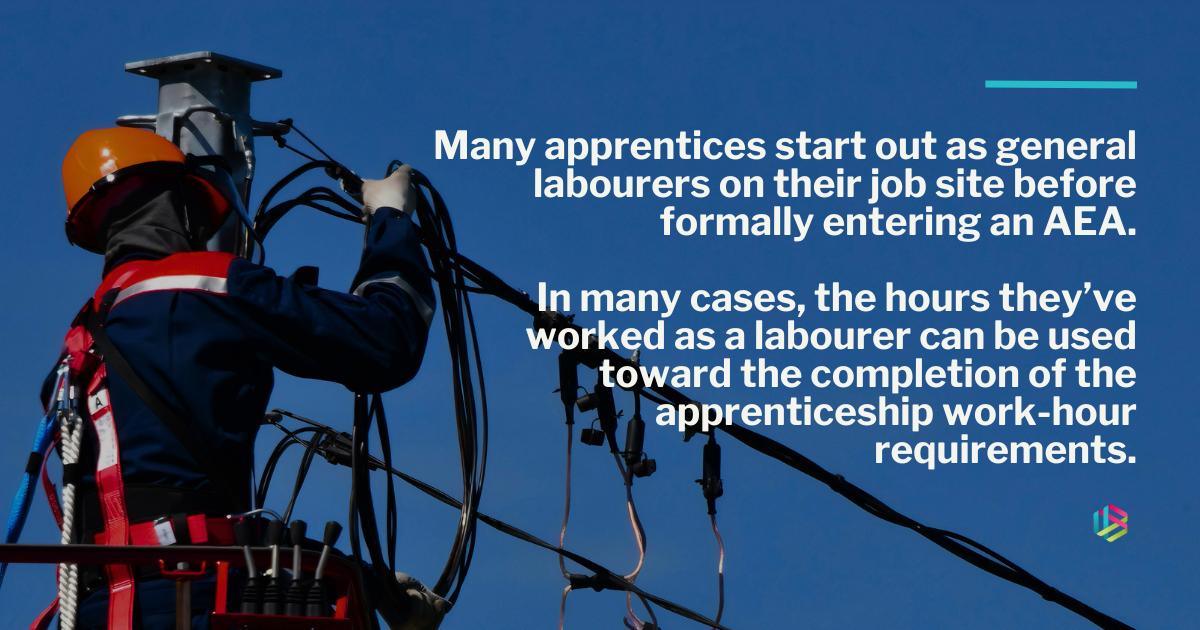
Many apprentices discover the apprenticeship pathway by working on a jobsite as a general labourer. Here, they become exposed to apprenticeable professions and the pathways that individuals on the jobsite take to become certified journeypersons in their trade. That said, it isn’t the only pathway. Other apprentices discover the trades through high school career and trades classes or through a dual credit program. Others find their way into a trade through personal research later in their career. These paths are discussed later in this commentary.
That said, in this section, we will focus on the pathway that an Albertan might take if they’re fresh out of high school or new to the worksite, working toward a journeyperson certificate with no meaningful prior experience, and where an apprenticeship is their best or chosen route to certification.
Let’s look at how each component of the apprenticeship model—the on-the-job and the classroom instruction—works:
On-the-job instruction:
On-the-job experience represents approximately 80% of the total time it takes to become a certified journeyperson. This component of apprenticeships requires a sponsor—either an employer (sometimes more than one) a labour union, or a non-profit organization—to agree to provide a prospective apprentice with paid, hands-on work experience under the mentorship, supervision, and tutelage of a certified journeyperson. This allows the apprentice to practice all the skills and competencies required to do the job, including activities that are typically restricted to certified journeypersons.
This apprentice-sponsor relationship must be formalized through what is called an Apprenticeship Education Agreement (AEA). This legal agreement between the two parties must be registered with the Government of Alberta through Apprenticeship and Industry Training (AIT).
Each trade will have different work hours and skill competency requirements. Here, we’re going to lean on the example of a boilermaker apprentice. That would-be boilermaker must complete at least 1560 hours of on-the-job training each year. As part of their AEA, the apprentice and their sponsor are responsible for tracking the apprentice’s required on-the-job work hours and their mastered competencies. These are formally recorded in a record book, also called a blue book or a competence portfolio. For each 12-month period of a boilermaker’s apprenticeship, for example, the apprentice must submit their record book to an AIT office for verification of period completion before they are eligible to take exams.
Classroom Instruction:
On-the-job experience on its own will not allow an apprentice to become a journeyperson. For designated trades, the other 20% of their time training is spent receiving technical classroom instruction at a polytechnic, trade school, or other post-secondary institution offering a recognized apprenticeship education program (AEP). Whereas the on-the-job training portion of an apprenticeship is covered by employer wages, an apprentice can access employment insurance and various government loans and grants to support them through the technical training components.
While the schooling requirements (and work experience requirements, for that matter) are different for each designated trade, an apprentice is required to attend classroom instruction in each year of the total apprenticeship length for 8-10 weeks per year. A boilermaker apprentice, for example, must complete three eight-week blocks of classroom instruction over their apprenticeship term, once per year over an intended three-year program.
If the boilermaker apprentice in our example successfully completes all their AIT-administered theoretical exams and their practical in-class training and exams after each year, they will receive a diploma from the post-secondary institution. While boilermakers are granted a diploma from their post-secondary institution, other designated trades may have a different post-secondary educational credential awarded depending on the complexity of the learning. Credentials that may be awarded include a certificate of achievement, a certificate, a diploma, or an advanced diploma. AIT’s credential index shows which trades offer which level of credential.
Some apprentices will register for two (and, on occasion, more) apprenticeship programs at the same time. These dual apprenticeships allow individuals to diversify their skills, thereby opening more opportunities to find work. Dual apprentices are still required to have a separate AEA for each program (even if they are with the same sponsor); and their on-the-job work hours and competency records must be recorded separately for each applicable trade.
If an apprentice has completed all their on-the-job training requirements and has their required post-secondary credential per their Alberta AIT trade curriculum guide (see the boilermaker curriculum, for example), they will be granted their journeyperson certificate upon application with the province. This certificate is often called a ticket.
Classroom credentials for non-apprentices?
Some Alberta post-secondary institutions also offer pre-employment trades programs. As the name suggests, these programs don’t require students to have an AEA in place before they begin their technical instruction. Accordingly, while a student may not have formally signed up as an apprentice with a sponsor, they can learn skills and competencies that can later apply to an apprenticeship after program graduation and once an AEA has been formally entered.
Lakeland College’s pre-employment welder program, for example, offers a 16-week pre-employment welder certificate program that allows a student to challenge the first period technical welding exam. This, along with some course credits, can be applied to the technical requirements of the apprenticeship for that trade.
Several institutions also offer pre-employment certificate or diploma programs that align with all the technical training requirements of a journeyperson of a given trade. This allows an individual to complete the required classroom instruction necessary for their trade, but concentrated over a year or two and in advance of their first job with a sponsor. While graduates of these programs will still have to complete and log all required workplace hours once they’ve enrolled in their apprenticeship, they will be able to challenge workplace and theory exams without having to alternate between completing workhours and attending classroom instruction as would have been the case if starting their apprenticeship from scratch.
Congratulations! You’re a journeyperson…but only in Alberta?
Trades and apprenticeship training are regulated at the provincial level. This means that each province will have different requirements for apprenticeship completion and journeyperson certification. Consequently, getting certified in Alberta does not automatically make an individual certified elsewhere in the country.
Fortunately, many Alberta-designated trades are also Red Seal trades, meaning that there is an exam that a journeyperson can take that, if passed, will give them a designation that is widely recognized across the country. For example, a Red Seal boilermaker can practice as a journeyperson in every province. There are 45 Red Seal trades or branches of trades recognized in Alberta.
However, not all Red Seal trades are designated in every province. For a trade to even have a Red Seal designation, it must be a designated trade in at least five provinces/territories. Some Red Seal trades, such as drywall finishers and plasterers, only have a Red Seal exam recognized by a handful of provinces—in this case, Newfoundland, Nova Scotia, Ontario, Prince Edward Island, and Quebec, but not elsewhere.
What about individuals with prior experience in Alberta or another jurisdiction? And what about trades without an apprenticeship option?
For individuals with prior experience in a trade, the path to becoming qualified to practice in Alberta will look a little different compared to starting a formal apprenticeship from scratch. Broadly speaking, there are four paths an individual could take. The first three of these—each of which is explicitly identified within the Alberta Trades Qualifier Programs—are for individuals with past experience such that they do not need to become an apprentice to work in their trade; or are for pathways to qualification for trades with no apprenticeship option. The fourth path is to help attract youth into the trades before high school completion by giving them a head-start on their apprenticeship journey.
1. Individuals with no Red Seal, but recognized certification in another jurisdiction:
Red Seal certification isn’t the only journeyperson credential Alberta recognizes from other jurisdictions. Alberta also unilaterally recognizes many journeyperson certificates from other Canadian provinces and territories, as well as from those granted from the Canadian Forces, and several international credentials from the United States and the Republic of Ireland. With any of these recognized credentials, an individual can come to Alberta and practice their trade in full without having an Alberta certification.
That said, there are some advantages to having an Alberta trade ticket. For one, if an individual with a recognized credential wants to challenge the Red Seal exam in Alberta, they need to register for an Alberta journeyperson certificate. Likewise, an Alberta ticket will likely be more widely recognized by Alberta employers and could open more job opportunities. To get their Alberta journeyperson certificate, an individual will need to apply with the province to have their credential verified and will have to pass theory and/or practical exams.
2. Individuals with no Alberta or Alberta-recognized certification, but with prior work experience in a trade:
Some individuals have significant prior work experience in an Alberta-designated trade, but do not have their Alberta certificate or an Alberta-recognized international certificate. For example, an individual may have an unrecognized trade certificate from a different country; however, they also have years of work experience in that trade that can be verified by an employer. These individuals can become certified journeypersons without taking an apprenticeship provided they meet the Trades Qualifier – Work Experience Program requirements for their trade.
First, an individual must demonstrate in their application to the Trade Qualifier – Work Experience Program that they meet the minimum required work experience outlined in their Alberta trade profile. For example, the boilermaker trade profile requires a minimum of 54 months and 7,020 hours of previous, employer-verified work experience for an application to the program to be successful.
If AIT verifies their work experience in their application, they then have 18 months to demonstrate their competency and knowledge in the trade. For a boilermaker, this means successfully passing a theory exam and a practical exam. For other trades, it may also require a recent Alberta employer and/or an Alberta certified journeyperson to attest to their competencies.
Assuming AIT is satisfied that all these requirements are met, and all exams are passed within the time limits, the individual will receive their Alberta journeyperson certification.
3. Canadians or permanent residents seeking qualification to work in a designated trade, but one that doesn’t have a formal apprenticeship program:
There are currently 12 designated trades in Alberta that do not have an apprenticeship program available. For these programs, individuals can work through the Recognized Training Program to earn their Alberta journeyperson certificate. These trades often have industry-run, on-the-job training and examination requirements that substitute for the rigour of the formal apprenticeship program model utilized by the other designated trades. While the administration of an applicant’s journey through this process is similar between the 12 trades, the specific requirements of each trade will look different.
4. Pre-high school graduates with recognized education and work experience:
Some students can get a jump start in the trades before they graduate high school through school programs offering creditable on-the-job and/or in-class education that can contribute to an apprenticeship’s requirements.
The Registered Apprenticeship Program (RAP) provides students the ability to enter an AEA and begin collecting paid, apprenticeship-eligible on-the-job experience with an employer while they’re still in high school and earning credits toward their high school diploma. This work experience can occur during the school year, through a full-time work term during a semester, on weekends, or during the summer break. A RAP student’s participation will automatically roll over into a formal apprenticeship once they graduate high school. And, in fact, many RAP graduates will challenge their first period exams and be able to finish their first full year of their apprenticeship training before their non-RAP peers.
However, finding a sponsor is not always easy for high school students. Fortunately, organizations, like CAREERS, can help connect high school students interested in RAP with an employer in their preferred trade who will take on the on-site training and supervisory role.
Alberta secondary schools also have the ability to provide dual credit pathways in the skilled trades, usually in partnership with a post-secondary institution and/or a journeyperson or an industry or business partner. Courses, which provide credits through the Career and Technology Studies program, can allow a student to challenge their AIT theory exams and complete their first year of technical training in a trade before peers who begin this process after graduating high school.
So, you didn’t complete your journeyperson certificate. Now what?
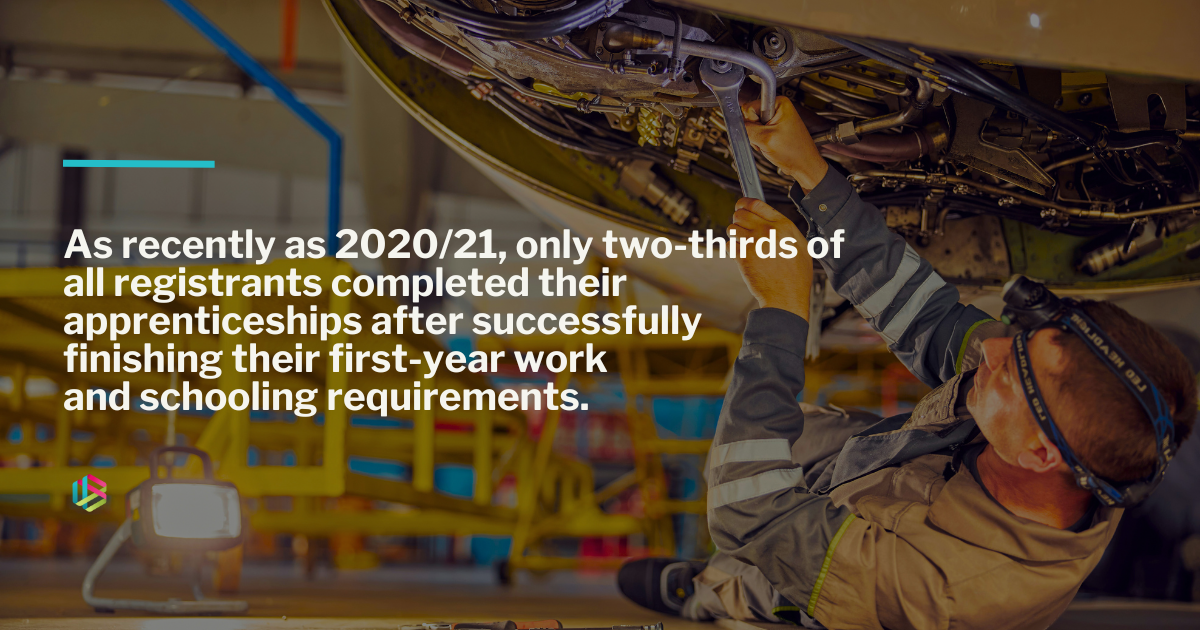
Many apprenticeship programs require multiple periods of study and work experience requirements (as noted earlier, in our boilermaker example, the program consists of three twelve-month periods each with schooling, work, and competency testing requirements). However, not every registered apprentice will finish their apprenticeship—whether by choice, a failure to meet on-the-job and/or schooling requirements within a specified timeframe, an inability to pass exams or competency evaluations along the way, or another unforeseen reason. In fact, as recently as 2020/21, only two-thirds of all registrants completed their apprenticeships after successfully finishing their first-year work and schooling requirements.
To be clear, being unwilling or unable to complete a journeyperson certificate does not mean being unable to work on the same worksite as a journeyperson. Yes, they’d be unable to perform restricted activities as discussed earlier, but employers regularly hire labourers for jobs that may not require a trade ticket—and many of the skills learned during an apprenticeship or in the classroom are still highly valued on the jobsite. That said, there is a tradeoff for non-completion; wages are higher for journeypersons because their technical skills, when required, are in shorter supply.
Conclusion
Completing an apprenticeship and becoming a journeyperson in Alberta requires excellence in both on-the-job experience and in-class technical training; and is much more tightly regulated and involves much more rigorous oversight than many realize. Understanding how certification works and what’s involved provides us with the comfort that our skilled tradespeople are highly qualified and that the products of their labour are of the highest quality. We can rest easy knowing that our roads, bridges, pipes, and homes are built by skilled hands; and that our equipment such as earthmovers, trucks, and airplanes are being maintained to the highest standards.
It also provides the context needed to understand just how much time and effort is required to do the jobs our society needs done. For Alberta to have enough skilled tradespeople to meet the needs of a growing population and maximize our broader prosperity ambitions, we must keep in mind that the journey to becoming a journeyperson is not easy—and concerted policy efforts must be taken to pave the way for aspiring tradespeople to acquire the expertise that we all benefit from.
Stay tuned as BCA considers how to address these concerns in our future skilled trades Task Force work.
